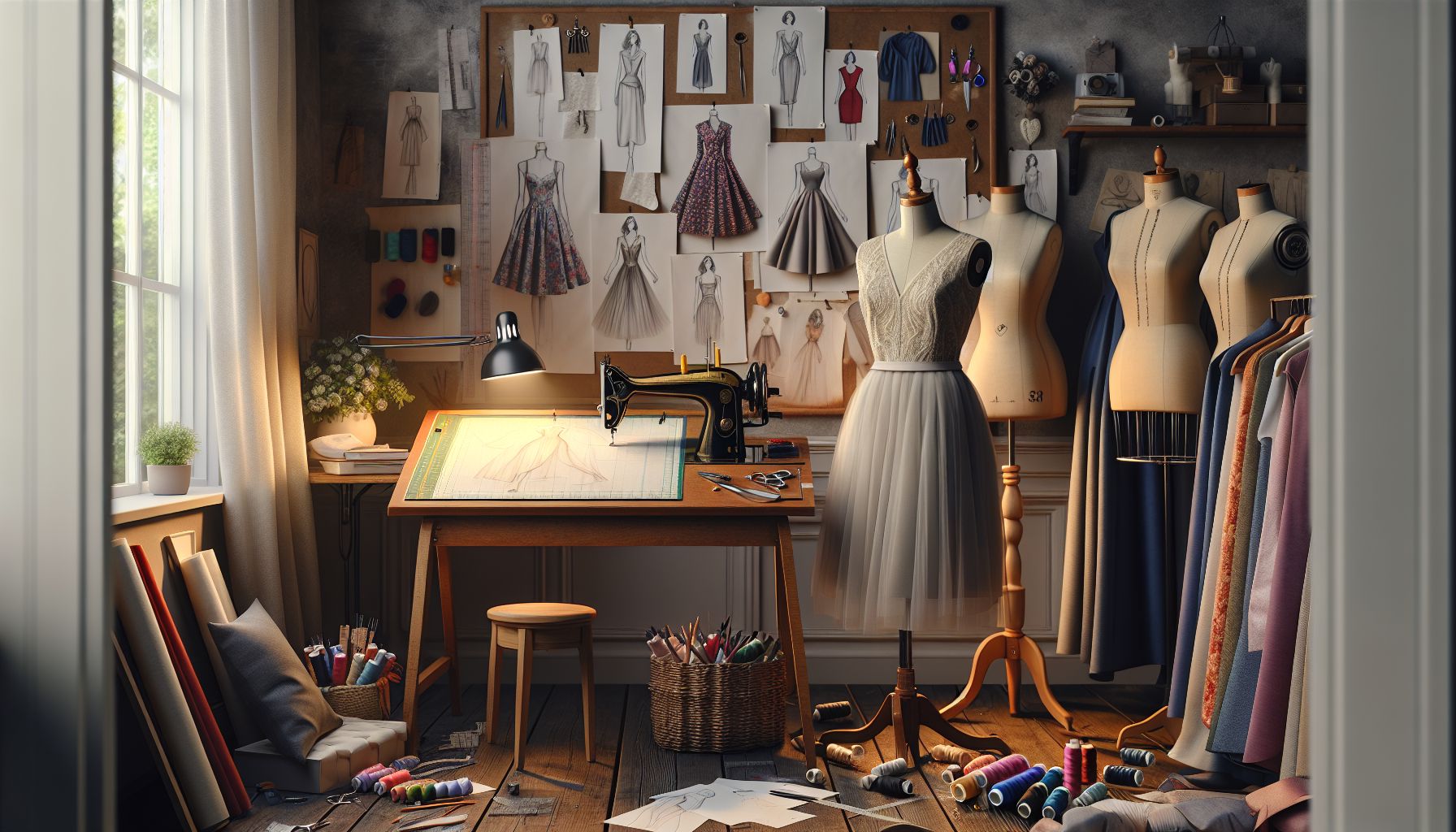
Dress Designing 101: Transforming Ideas into Fabric Art
Designing a dress is a delicate balance between creativity, craftsmanship, practicality, and style. It is a process of intricately transforming two-dimensional sketches into wearable three-dimensional artistry. Even if you’re a beginner, there’s no need to be wary. Designing a dress is not as intimidating as it may first appear. By following these straightforward steps, you can fairly easily bring your fashion vision to life.
The Birthplace of the Dress: Inspiration
Creative ideas can be typically elusive, but they can also strike in the most unexpected places. Start being attentive to the world around you—it’s brimming with inspiration. Fashion trends, nature, architecture, paintings, and even different cultures could serve as excellent springboards for your designs.
Tip: Always keep a notebook or sketchpad handy for those sporadic bursts of inspiration.
Let Your Pencil Do the Talking: Sketching
Once you have your concept, express it onto paper. The idea here is not about perfecting the sketch but about translating your inspiration into a design. If you are an amateur, don’t fret over perfection. It’s more vital that the sketch aids you in visualizing the conceptual form, detailing, and silhouette of the dress.
Paint a Palette: Selection of Colors and Print
The color and print you choose hold the power to revamp the overall look of your design dramatically. For instance, the same dress could look flamboyant in a bright hue and print or give off a minimalist vibe in a monochrome palette. While selecting colors, consider the season, the occasion the dress would be appropriate for, and the personality of the likely wearer.
Choosing the Fabric: Material Matters
One key aspect that could make or break your dress design is the choice of fabric. Apart from adding a layer of texture and detail to your design, the fabric plays a pivotal role in determining the fall, look, and comfort of the dress. The choice of fabric is a crucial aspect that marries the aesthetic aspect with the utility of the design.
Specify Your Size: Stitching Instructions and Measurements
Designing just a beautiful dress isn’t enough; it needs to fit beautifully too. Well-tailored clothing requires meticulous measurements to ensure they accentuate the wearer’s best features. Sketch the measurements of the dress and offer precise stitching instructions to make your design seamless and wearable.
Craft Your Design: Sewing
It’s time to convert your vision into reality. If sewing it yourself seems daunting, partnering with a professional seamstress or a skilled tailor can give your design the precise manifestation it deserves. Form a rapport with the artisan, articulating clearly about the fabric, stitching, and finishing details.
Remember: A dress is an ambience that you create around a person. Ensure your dress, not just beautifies, but also instills confidence and joy.
Reflection and Refinement
Your first dress is unlikely to be perfect – and that is okay. Developing a design is an iterative process. Reflect on what works and what doesn’t, and refine your designs accordingly. Don’t get disheartened by initial failures; they are the paving stones for your path to success.
In conclusion, fashion design is a world where art and functionality constructively clash. It’s where creativity meets practical utility. It’s not always an easy task to pull off, but with patience, perseverance, and practice, designing a dress can be an incredibly rewarding experience. From the thread of an idea, through design and execution, to the final flourish of sartorial elegance—designing a dress is a journey, an art.
Embrace the process, because every stitch, every pleat, and every detail brings you a step closer to creating a masterpiece. Always remember, in the world of fashion design, your imagination is your limit. Now that you’re equipped with the basics of dress designing, it’s time to unleash your creativity!
A dress is not just a piece of clothing; it reflects an expression, a style, an attitude. Designing one makes you the architect of that expression.